What water mitigation does, and why the clock matters
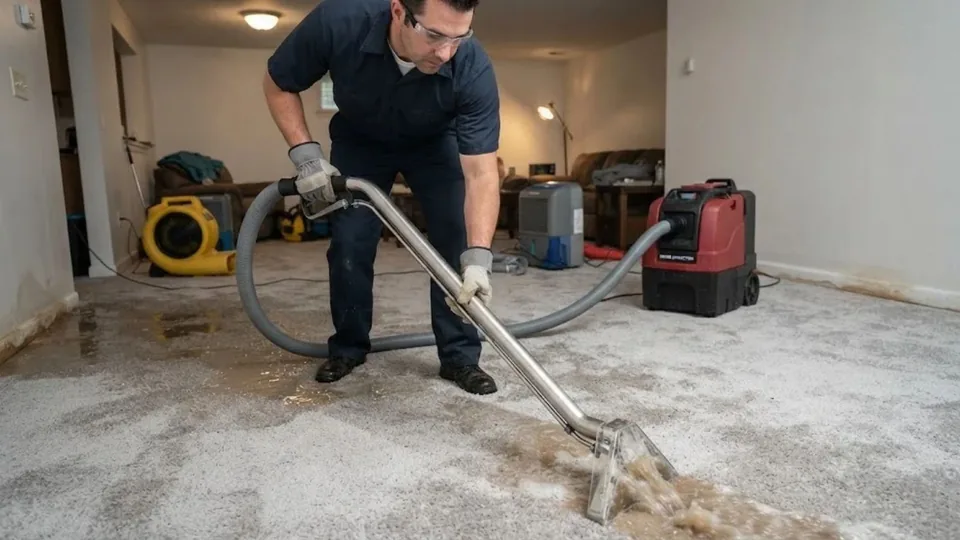
Water mitigation in Downey, CA is the emergency work that happens in the first hours and days after water gets into a building: stopping the damage from spreading, removing standing water, and drying wet materials before they rot or grow mold. It is different from restoration, which is the repair and rebuilding that comes afterward.
Mold can start in damp materials within 24 to 48 hours, which is why mitigation is the stage with a deadline. Call the restoration line as soon as the water source is stopped.
Mitigation
- Starts within hours of the loss
- Extracts water and removes soaked materials
- Dries the structure with equipment
- Protects what can be saved
Restoration
- Starts after the building is dry
- Repairs and rebuilds damaged areas
- Replaces flooring, drywall, and paint
- Returns the space to normal use
What to do while you wait for the crew
- 1Stop the water source: close the main shutoff or the fixture valve.
- 2Photograph and video everything before it is moved.
- 3Lift furniture off wet carpet, and put foil or blocks under the legs.
- 4Remove wet rugs and small items from the area.
- 5Do not use a household vacuum on water, and do not walk through standing water near outlets.
Need water removed now?
Call the restoration line. Every hour counts toward preventing mold.
What you will see in your house
| Equipment | What it does | Why it is there |
|---|---|---|
| Moisture meter | Reads moisture inside materials | Shows what is wet, and tracks drying |
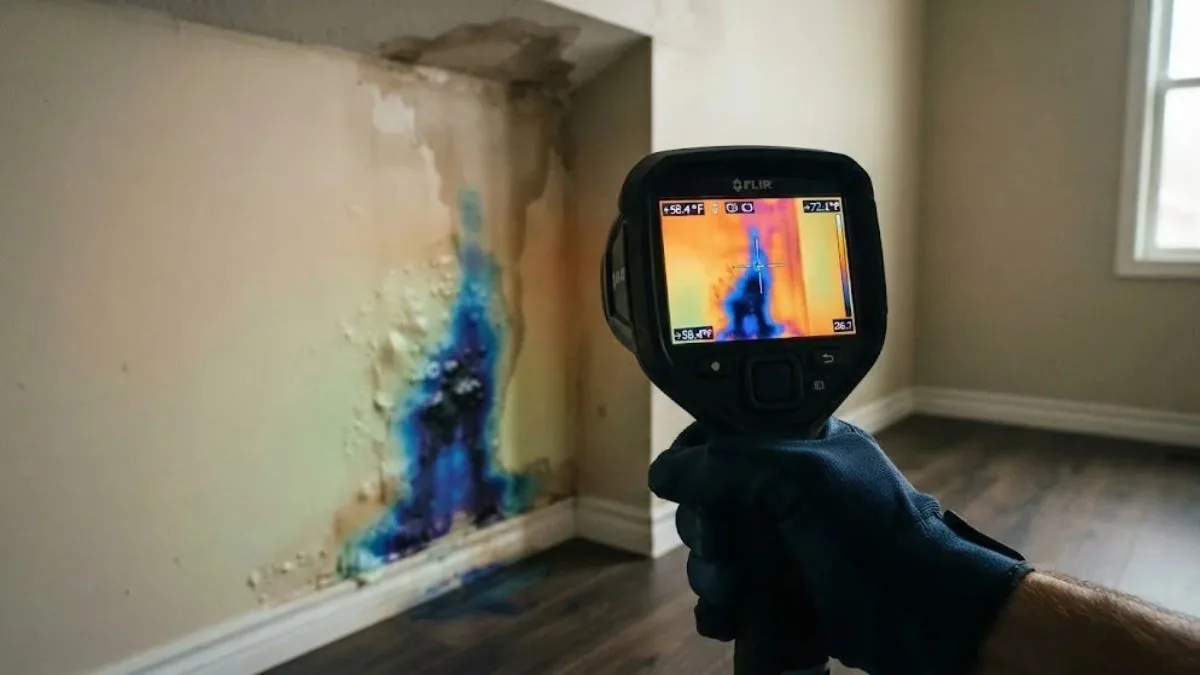
| Thermal camera | Shows temperature differences | Finds hidden wet areas behind walls |
| Air mover | Pushes air across wet surfaces | Speeds evaporation |
| Dehumidifier | Pulls moisture from the air | Keeps moisture from moving elsewhere |
| Extractor | Removes standing water | Starts the process fast |
Why Downey homes need speed
Mitigation work follows the ANSI/IICRC S500 standard for professional water damage restoration, which sets out how losses are classified and dried. About 13,400 of Downey's homes date to the 1950s by census-based counts, and about 3,000 more to the 1940s. Houses that age often have layers of old flooring and wall materials, and water can travel under them before it shows. A wet spot on the ceiling is often a sign that the wall cavity above it is soaked.
The best way to limit damage is to find the shutoff valve before you need it, as our pipe burst repair page explains. After mitigation, the next stage is water damage cleanup, and a plumber should find the cause so the loss does not repeat. For a mystery leak, hidden leak detection comes first.
How mitigation runs
Stop and assess
The source is stopped, and meters map the water.
Extract
Standing water and soaked materials are removed.
Dry
Equipment runs, with moisture readings every day.
Verify
Readings confirm the structure is dry.
What affects mitigation cost
Insurance note: many policies expect you to take reasonable steps to stop further damage, and mitigation costs are often part of a covered claim. Keep records and ask your insurer what it requires. This is general information, not insurance advice.
Water mitigation questions from Downey
Mitigation is the emergency stage after a water loss: stopping further damage by removing standing water, drying wet materials, and protecting what can be saved. Restoration is the longer stage that follows, repairing or rebuilding. Mitigation is the part with a clock on it.
It depends on the size of the loss, the materials, and the humidity. Many clean-water losses are dried over a few days with air movers and dehumidifiers, and moisture readings are taken each day to confirm progress. The job is done when readings return to normal for that building, not on a set schedule.
Wet materials release moisture into the air. Air movers push air across wet surfaces, and dehumidifiers pull that moisture out of the room. Without the dehumidifiers, the water just moves around the building. The equipment count is set by the size of the area and the class of loss.
For a tiny, recent spill with a box fan, maybe. For anything larger, professional equipment and moisture meters make the difference between drying the structure and hiding the problem. Dampness that is left behind inside walls is where mold starts.
It depends on the source. Clean-water losses are usually safe once power hazards are controlled. Sewage losses are not, and anything touched by contaminated water needs professional handling. If you are unsure, ask when you call.
Photos and video of the damage, the moisture readings taken each day, the equipment list, and all receipts. Those records support an insurance claim. Ask for copies of the readings.
Water still spreading?
Call the restoration line now and stop the damage from settling in.
We handle mitigation calls in the South Gate area and the other cities near Downey. If the water came from a failed heater, see heater repair once the drying is under way.
Los Angeles County homes in Downey, from Rancho Los Amigos to Downey Landing, can hold moisture in wall cavities long after the surface looks dry. The City of Downey Water Division can confirm a main break outside, but inside the house a moisture meter tells you what is wet.
Water spreading right now?
Call the restoration line. Stop the damage before it settles in.
☎ Call (833) 521-1033