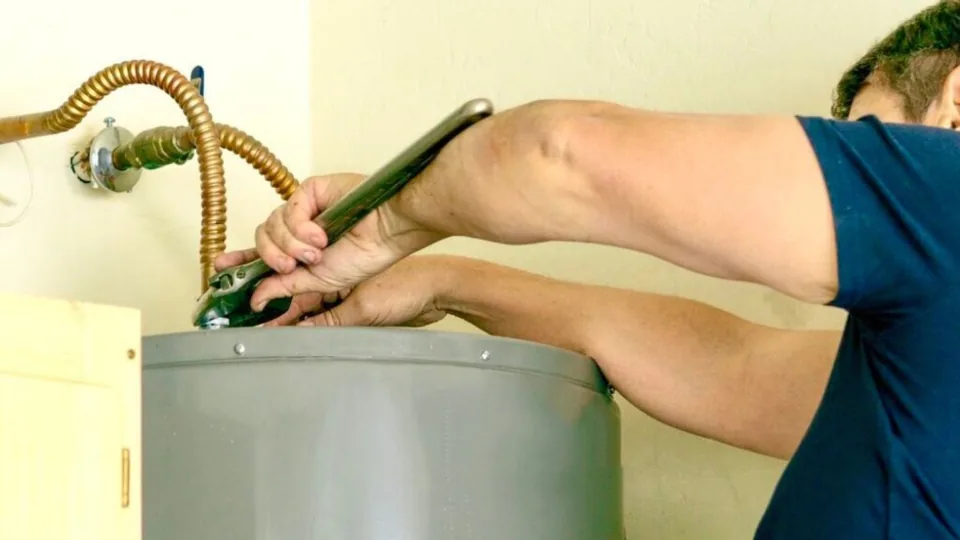
Water heater repair in Downey, CA is the work of finding out why a tank or tankless unit stopped heating, started leaking, or began making noise, and fixing the failed part when that is the cheaper path. Call the 24/7 line when the unit is leaking or there is no hot water, and a plumber will test it before suggesting anything.
The first question is always the same: is this a part, or is this the tank? A thermostat, a heating element, a pilot assembly, and a relief valve are all repairs. A tank that has rusted through is not.
What your water heater is telling you
| Symptom | Gas unit, likely cause | Electric unit, likely cause |
|---|---|---|
| No hot water at all | Pilot out, thermocouple worn, or gas control valve failed | Tripped high-limit reset, failed upper element, or a bad thermostat |
| Lukewarm water, runs out quickly | Sediment on the burner side or a weak pilot | Lower element burned out or a failed lower thermostat |
| Rumbling or popping from the tank | Sediment layer boiling under the bottom | Sediment layer covering the lower element |
| Water pooling at the base | Tank corrosion, or a leaking drain valve or fitting | Tank corrosion, or a leaking element gasket or fitting |
| Rusty or smelly hot water | Worn anode rod or internal corrosion | Worn anode rod or internal corrosion |
| Relief valve dripping or hissing | Pressure or temperature is too high, or the valve is worn | Pressure or temperature is too high, or the valve is worn |
If the tank is leaking, do this first
- 1Turn off the power at the breaker for an electric unit, or turn the gas control to off for a gas unit.
- 2Close the cold water valve on the pipe above the tank.
- 3If the water is hot and spreading, keep people clear of the floor.
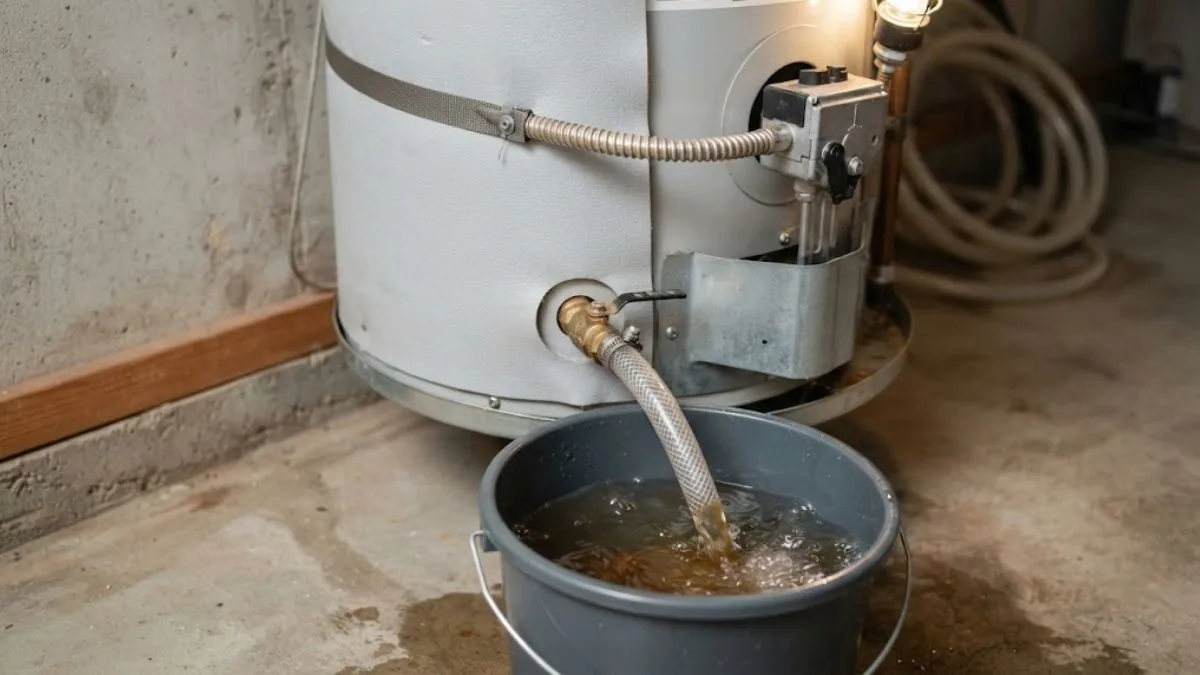
- 4Let the water cool before you touch the tank. Then open a hot tap elsewhere in the house and drain the tank slowly through its drain valve with a hose run to a floor drain or the yard.
- 5If you smell gas at any point, leave the house and call 911 or your gas utility from outside.
No hot water or a leaking tank?
Call now and we will tell you what to check while a plumber is on the way.
A fair way to decide
Repair makes sense when the tank is sound and the failed part is inexpensive. Replacement makes sense when the tank has failed or the unit is near the end of its life. Four questions settle most cases.
How old is the unit? The date is on the data plate, and many serial numbers encode it. Is the tank itself leaking?
Has it needed more than one repair in the past year? Does the household's hot water use match its size? If the answers point to an old, leaking, or undersized tank, spending on a part is usually throwing money after a unit that is about to quit.
Usually a repair
- Tank is under about eight years old and dry underneath
- A single part has failed: element, thermostat, thermocouple, valve
- No history of repeated service
- Anode rod is still in good condition
Usually a replacement
- Water seeping from the tank body
- Unit is past ten years and has needed repeat repairs
- Heavy sediment that does not flush out
- Household has outgrown the tank size
When replacement is the right answer, we move to water heater installation and replacement and size the new unit to your household, not to the tank that failed. That keeps the new heater from running short in the first cold snap.
Why tanks work harder in Downey
The City of Downey Water Division draws its supply from 20 deep groundwater wells in the Central Basin, with three imported connections from the Metropolitan Water District for backup. That supply is hard.
Hard water leaves scale. In a water heater, the scale settles as sediment on the tank floor, insulates the water from the burner or lower element, and makes the unit work longer to deliver the same heat. It also eats the anode rod, the sacrificial metal that protects the steel tank from rusting. When the rod is gone, the tank starts to corrode.
The practical step is a yearly flush and an anode inspection. It takes less time than a repair call, and it can add years to a tank. For households that want to cut the scale at the source, a water softener addresses the cause.
City pressure matters too. Downey's water yard targets about 65 psi, and individual homes can see more depending on elevation and distance. The California Plumbing Code, built on the Uniform Plumbing Code (UPC), expects a pressure regulator when static pressure exceeds 80 psi, because high pressure strains the tank, the relief valve, and every fixture.
What a repair visit includes
Look and listen
Data plate, venting, connections, and the sounds the unit makes.
Test the parts
Meter, thermostat, element, gas valve, or flow sensor, in order.
Tell you the finding
A plain explanation of what failed and your options.
Fix and verify
Repair, check straps and the relief valve, then run hot water.
What water heater repair costs
Insurance note: sudden leaks from a failed heater are often covered for the resulting water damage, though the heater itself is usually not. Gradual seepage that went unnoticed may not be. Photograph the damage and the data plate before you start cleanup.
Water heater repair questions from Downey
It depends on where the water is coming from. A drip at a fitting, the relief valve, or the drain valve is often a repair. Water seeping from the bottom of the tank itself means the steel has corroded through, and no repair holds that. Turn off the power or gas, close the cold supply, and call. We will tell you which case you have.
Eight to twelve years is a common range for a tank unit. Hard water shortens it by building sediment on the bottom of the tank and consuming the anode rod faster. Downey's water is hard, so yearly flushing and an anode check matter more here than in a soft-water city.
On a gas unit the usual suspects are a pilot that went out, a worn thermocouple, or a failing gas control valve. On an electric unit it is typically a heating element or a thermostat. A tripped high-limit reset is another common cause. We test each in order so you pay only for the part that failed.
The noise is steam bubbles forcing through a layer of sediment. It is not an immediate hazard, but the sediment overheats the tank bottom and cuts efficiency. A flush often quiets it. If the tank is old and the sediment is thick, replacement may cost less than repeated service.
Yes. California requires water heaters to be braced so they do not tip during an earthquake, and a tipped unit can rupture its gas or water connections. Any repair or replacement we do includes checking that the straps are in place and tight.
Yes. Error codes, scale buildup in the heat exchanger, and failed flow sensors are common service calls. Our tankless water heater service page explains flushing and descaling in more detail.
A heater that leaks may not be the only thing leaking. A damp wall or a higher water bill alongside it points to a hidden line, which is a job for water leak detection. We also send plumbers for heater calls to neighbors in the South Gate area and the Pico Rivera area on the same 24/7 line.
Downey, in Los Angeles County, is served by the City of Downey Water Division's 20 wells, with three Metropolitan Water District connections in reserve. Whether the heater sits near Wilderness Park or the Downey Theatre, that hard water leaves sediment at the bottom of the tank, so a flush is the first thing we check.
Cold showers or a leaking tank?
Call the Downey line any hour. We will start with what to shut off.
☎ Call (562) 488-9614