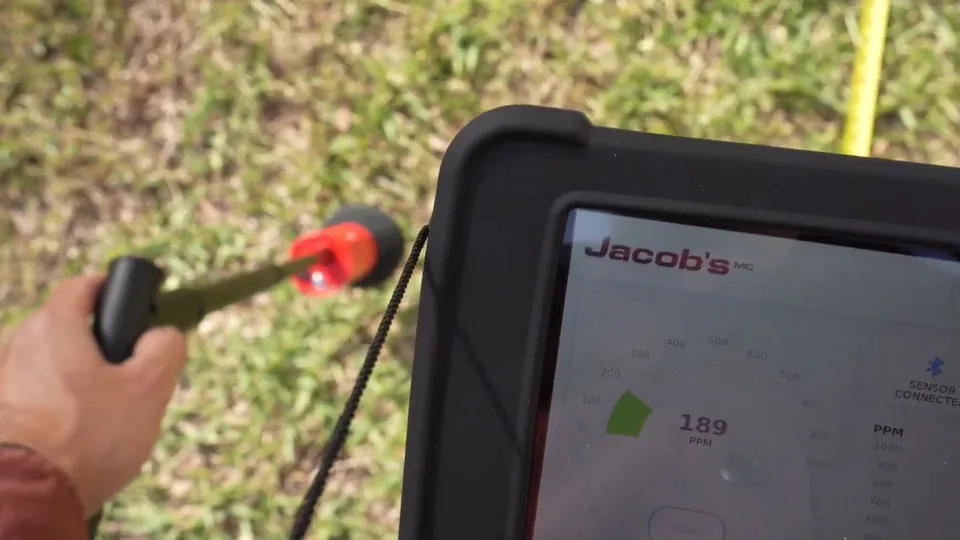
Water bill up, floor warm, and no visible leak
A slab leak rarely shows itself the way a ceiling leak does. The first clue is often the water bill, a faint hiss when the house is quiet, or a spot on the floor that feels warmer than the rest. In a garage, it may be water seeping at the slab edge near the foundation. In a living room, it may be damp flooring that no one can explain.
If any of that sounds familiar, you are in the right place. These are the symptoms that bring most homeowners to this page, and they all lead to the same first step: confirm that water is escaping, then find where.
Slab leak detection and repair in Downey, CA means locating a leak in a pipe buried in or under a concrete slab foundation and fixing it with as little cutting as possible. The method is tracing first, repair second, and we explain your options before any concrete is opened.
Quick checks before you call
- 1Run the meter test on our leak finding page to confirm water is leaving the system.
- 2Walk barefoot across floors you suspect. A hot-water leak can leave a warm patch.
- 3Look for damp baseboards, buckled flooring, or new cracks in tile.
- 4Listen at a quiet time near walls and floors for the sound of running water.
- 5Check whether the water heater runs more than usual.
How we trace a leak under concrete
| Tool | What it does | Why it matters |
|---|---|---|
| Pressure test | Isolates which line is losing pressure | Tells us hot or cold, and which branch |
| Acoustic listening | Picks up the sound of water escaping a pipe | Narrows the spot to a few feet |
| Thermal imaging | Shows temperature differences on the floor | Confirms a hot-water leak path |
| Electronic line locator | Traces the route of buried pipe | Keeps the opening in the right place |
Think there is a leak under the floor?
Call and describe what you notice. We will tell you where to start.
Why slab leaks show up in older neighborhoods
Downey's building boom ran through the 1950s, and census-based counts put roughly 13,400 homes in that decade. Some homes from that era sit on raised foundations and others on slabs. For the ones on slabs, supply lines were often laid in or under the concrete, which means decades of contact with a material that can wear on pipe.
Water quality adds to the wear. The supply is hard, and mineral scale can rough up pipe interiors and speed pitting at weak points. We cannot tell by looking whether scale is the cause of a given leak, but we note what the failed section looks like and share that with you.
City pressure around 65 psi at the yard, and sometimes more at the house, keeps water pushing through even a tiny hole. A pinhole can lose a surprising amount in a month, which is why the bill tends to be the first witness.
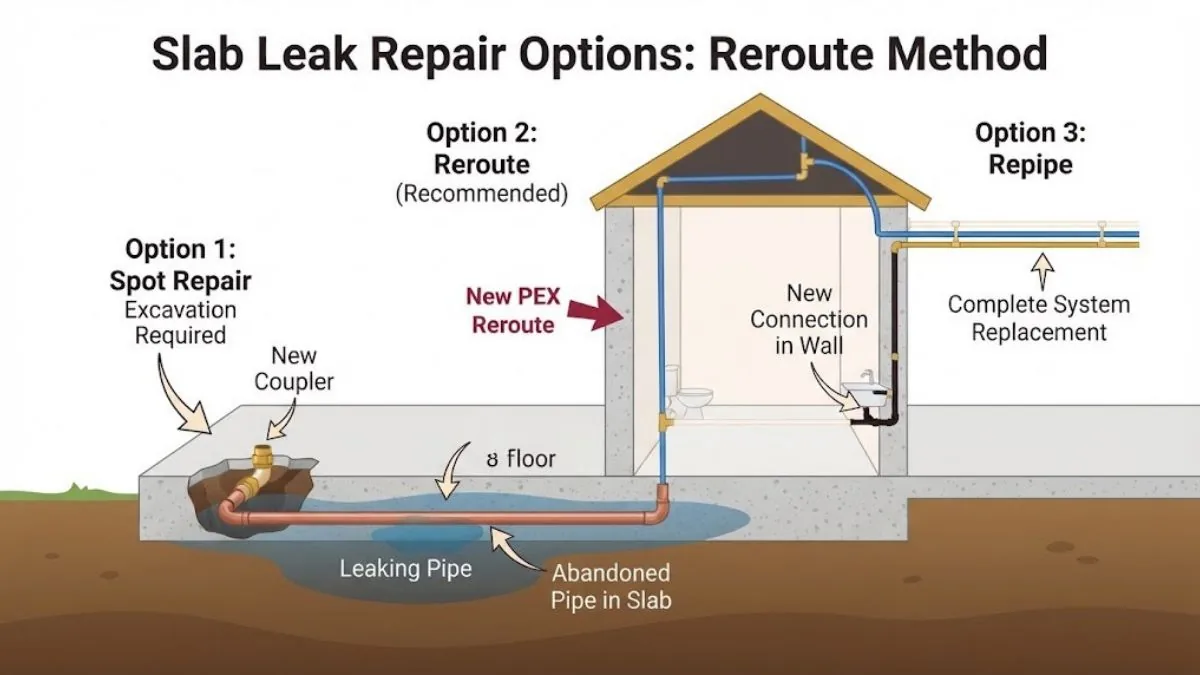
Break the slab, reroute, or repipe
| Option | Best when | Trade-off |
|---|---|---|
| Spot repair through the slab | One leak, accessible location, sound pipe nearby | Concrete is opened and patched, and flooring may be disturbed |
| Reroute through walls or attic | Line is failing or the leak is in a hard-to-reach spot | More plumbing work, but no cutting in the slab |
| Full repipe | Repeat leaks or widespread corrosion | Largest scope and cost, but ends the cycle |
The Uniform Plumbing Code (UPC) expects water piping to be tested and proved tight at working pressure after a repair, and we run that test before the slab is patched. A second leak within a year or two on the same line is a pattern. We say so when we see it. For a whole-house solution, ask us about repiping, and for a line from the street, see water line replacement.
What we will not do
We will not open the slab until the leak has been traced and confirmed. We will not recommend a reroute or repipe if a spot repair will last. And we will not tell you the foundation is at risk based on a hunch. If we think structural damage is possible, we tell you to speak with a structural engineer.
What the visit looks like
Confirm
Meter and pressure tests prove water is leaving.
Trace
Listening and thermal tools find the spot.
Choose
You see the options with prices before work.
Repair and test
The fix is pressure-tested before closing up.
What shapes a slab leak estimate
Insurance note: some policies pay for access to a sudden leak while excluding the failed line. Others exclude slab leaks altogether. Ask your insurer before work starts, and keep our written findings.
Slab leak questions from Downey
Look at the floor line from outside and at the garage. A house on a raised foundation has vents or a small crawlspace access around the base. A house on a slab sits directly on concrete with no crawlspace. Your inspection report, original plans, or a quick walk around the perimeter will tell you.
The usual signs are a water bill that climbs with no change in habits and the sound of running water when everything is off. A warm spot on the floor, damp flooring, cracked tile, a musty smell, and low pressure count too. A hot-water leak under a slab can also make the water heater run more often.
Usually, yes. Tracing narrows the leak to a small area, so a repair opens a patch of concrete, not the whole floor. Another option is to abandon the damaged line and run a new one through the walls or attic, which avoids cutting the slab at all.
A long-running leak can saturate the soil under a slab and, in some soil types, contribute to settling or heave. Not every leak does this. Finding it early is the best protection, and we describe what we see before we recommend any plan.
Common causes include pinholes from corrosion, abrasion where pipe rubs concrete or rebar, joint failures, and ground movement. The cause matters because it tells us whether a repair will last or whether the line is likely to fail again.
Some policies cover the cost of reaching the leak or the damage it causes, while excluding the failed pipe. Wear and gradual seepage are often excluded. Read your policy, keep photos and a copy of our findings, and call your insurer before work begins.
We handle slab leaks in South Gate, CA and across the nearby cities as well. If the leak is on a visible pipe instead, pipe burst repair is the faster route.
Slab leaks in Los Angeles County homes, including those near the Columbia Memorial Space Center and Rancho Los Amigos, can run unseen under the floor. If you hear running water with every tap off or find a warm spot on the floor, treat it as an emergency and call the 24/7 line. The City of Downey Water Division's meter test is a quick first check, and the 24/7 call settles what comes next.
Suspect a slab leak?
Call the Downey line. We will start with a few questions and a meter test.
☎ Call (562) 488-9614