Rusty water, weak pressure, and leaks that keep returning
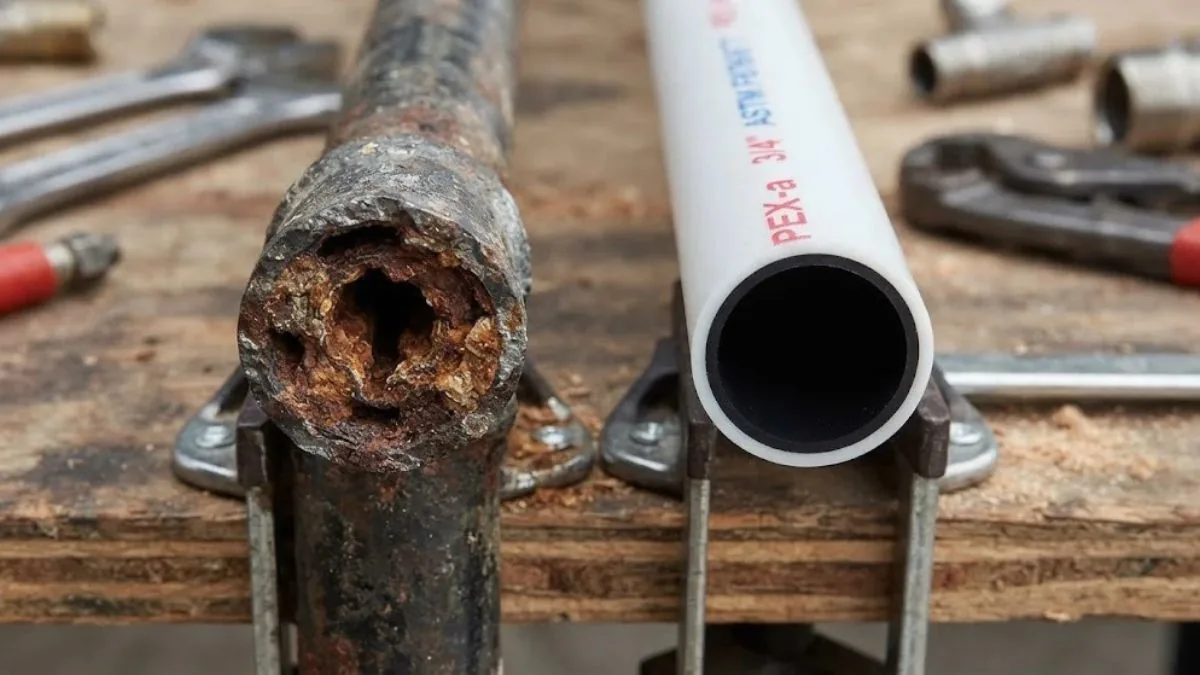
Pipes rarely fail without warning. Water that runs brown or rusty when you first open a tap, pressure that fades across the house, blue-green stains near fittings, and repeated pinhole leaks are signs that the supply pipe is wearing out from the inside.
Another hint is the repair history. If you have fixed three leaks in two years, the next one is already forming. Each repair buys a few months on a system that is failing everywhere, and the opened walls add to the cost.
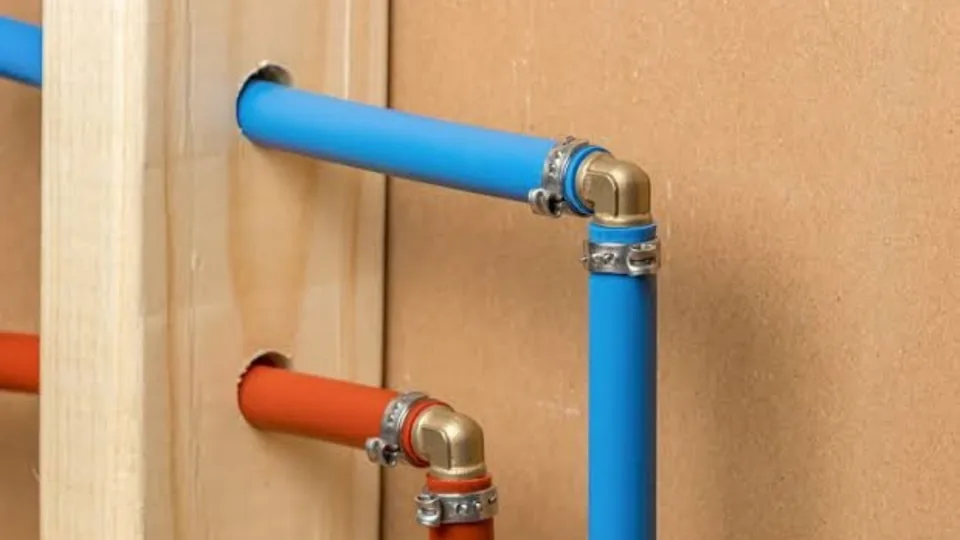
Repiping in Downey, CA means replacing the water supply pipes inside the house, from the main shutoff to each fixture, with new PEX or copper. It does not cover the underground line from the meter, which is a separate job described on our service line repair page.
| Material | Common history | Typical issues | Today |
|---|---|---|---|
| Galvanized steel | Widely used in homes until about the 1960s | Internal corrosion, narrowing, rust-colored water | Usually replaced when found |
| Copper | Standard for decades afterward | Pinholes, joint failures, green staining | Still used, long record |
| CPVC | Used in some homes from the 1980s | Becomes brittle with age and heat | Replaced if brittle |
| Polybutylene | Used in some homes in the 1980s and 1990s | Known to fail at fittings | Replaced when found |
| PEX | Common in modern work | Needs proper protection from sunlight | Standard choice for repipes |
What is in your walls depends on the home's age and its remodel history. The only reliable way to know is to look, and we do that before recommending a repipe.
What Downey's housing says about repiping
Census-based counts put about 13,400 Downey homes in the 1950s, 3,000 in the 1940s, and roughly 5,800 in the 1960s. Homes built then went up with the materials of their time, and many have been partly repiped since. That mixed history is why we inspect before quoting.
Hard water adds a variable. The city's supply is hard, and scale accumulates in old pipes and can restrict flow. It does not cause every repipe, but it contributes to the pressure complaints we hear.
A repipe is also a natural time to add a pressure regulator. The California Plumbing Code, built on the Uniform Plumbing Code (UPC), expects one above 80 psi, and new pipe should not be stressed by high pressure.
A spot repair
- One failure on otherwise sound pipe
- Small opening in the wall
- Quick and lower cost
- Does not stop new leaks elsewhere
A repipe
- Repeated failures or widespread corrosion
- Opens walls once, on a plan
- New pipe with a long service life
- Often resolves low pressure and discoloration
Wondering if your pipes are done?
Call and describe the leaks and the water. We will tell you what to look at.
How a repipe is done
Inspect and plan
We confirm the pipe material and decide on a route.
Permit
The city permit is pulled and the schedule is set.
Replace
New lines are run, connected, and pressure tested.
Patch and inspect
Access holes are patched and the city inspects.
What to do before a repipe day
- 1Clear access to the areas where holes may be cut, including closets and cabinets under sinks.
- 2Plan for the water to be off during parts of the day.
- 3Move valuables and wall hangings away from work areas.
- 4Keep pets and children out of the work area.
- 5Ask for the finished drywall plan in writing.
What shapes a repipe estimate
Insurance note: repiping from age or corrosion is typically a homeowner expense. A sudden failure that floods the house may be covered for the damage it causes, not for the pipe. Check your policy before you decide.
Repiping questions from Downey
A single leak on otherwise sound pipe is a repair. Repeated pinhole leaks, rusty or discolored water, low pressure at several fixtures, and pipe that crumbles or flakes when cut point toward repiping. We trace the problem and, if possible, show you pipe samples before recommending anything large.
For many homes, a few days, but it depends on size, access, and the number of fixtures. Water is shut off during parts of the job, and we plan around that. We give you a schedule with the written price.
PEX and copper are the common choices. The California Plumbing Code allows PEX, which resists corrosion and flexes through framing. Copper has a long track record and tolerates heat well. We explain the trade-offs in cost, water quality, and noise.
Some access is needed, but modern methods keep it small. PEX can be fished through walls and attic space with small openings. We discuss where holes go, and drywall patching is part of the plan.
Yes. A repipe normally requires a permit and city inspection, and the contractor handles both. The new piping is pressure-tested before the walls are closed.
Often, yes. If only one wing or the hot side is failing, a partial repipe can make sense. A pattern of leaks across the house usually means a whole-home solution is cheaper over time.
Not sure whether the leak is in the walls at all? Start with hidden leak detection. If you only have one failed pipe, burst line repair is the right fix. We also repipe homes in the South Gate area and nearby cities.
Los Angeles County homes in Downey built in the 1950s, from the Columbia Memorial Space Center to Wilderness Park, often still carry original supply pipe. Hard water from the City of Downey Water Division speeds corrosion and scale, so repeated pinhole leaks are the sign we watch for.
Thinking about repiping?
Call the Downey line. We will start with what you see in the water.
☎ Call (562) 488-9614