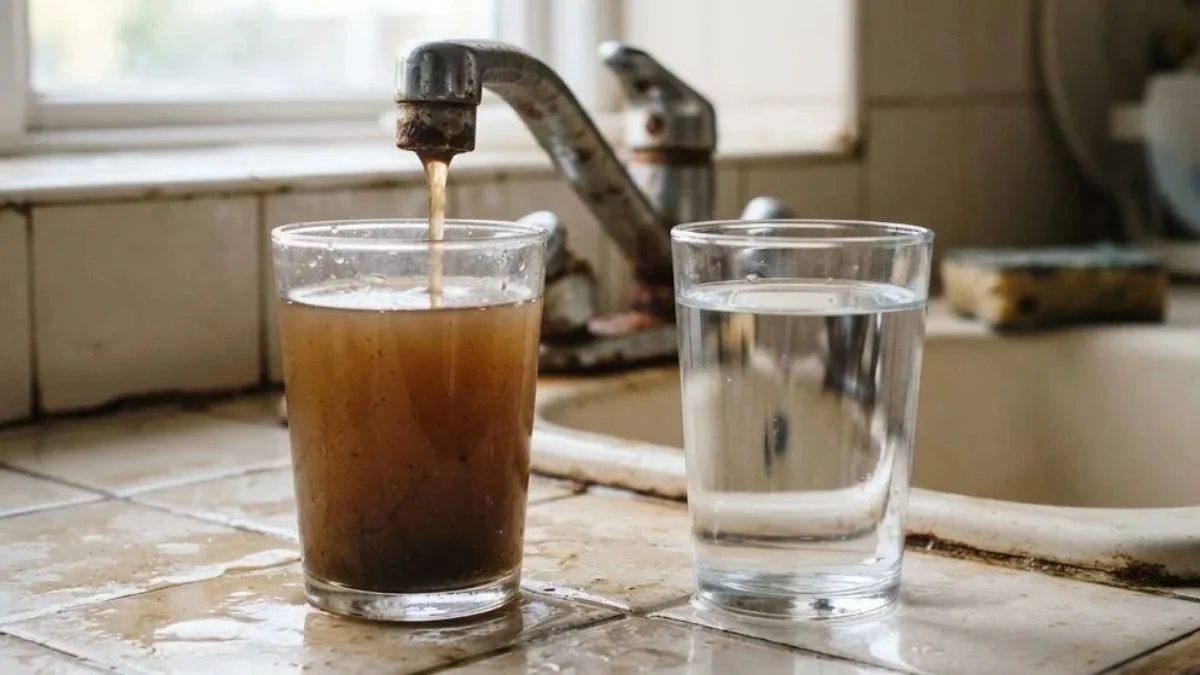
Brown or rusty water usually comes from one of four places: your water heater, old iron or steel pipe inside the house, the utility's mains after a flushing or repair, or naturally occurring iron and manganese in groundwater. The quickest clue is whether the color shows up in cold water, hot water, or both, and whether it clears after a few minutes of running the tap.
Do not wash a load of laundry until the water runs clear, because brown water can stain fabric. Then use the table below to work out the likely source.
A quick diagnostic table
| What you see | Likely source | Next step |
|---|---|---|
| Hot water only is brown | Water heater tank or anode rod | Flush the tank, check its age |
| Cold water is brown for a few minutes after being unused | Old steel or iron pipe in the house | Ask about the pipe material |
| Everything brown, then clears in minutes | Utility flushing or main work | Run the cold tap, wait |
| Brown or black staining on fixtures over time | Manganese or iron in the supply | Check the utility's report |
| Brown water at one fixture | Corroded fixture or supply line | Inspect that fixture |
What to do right now
- 1Run the cold tap at the lowest point in the house until it clears.
- 2Do not use hot water until the cold is clear, to avoid drawing discolored water into the tank.
- 3Hold off on laundry and the dishwasher.
- 4Check whether neighbors have the same problem, which suggests the utility.
- 5Call your utility if it lasts more than a few hours.
Manganese and iron are named in local reports
The City of South Gate's 2021 report says one of its wells exceeded the secondary limit for manganese and is treated for iron and manganese. It adds that the manganese limit exists to protect against stains on laundry and plumbing fixtures. Golden State Water's 2026 Norwalk report also lists manganese among its aesthetic measures.
The City of Paramount's 2018 report says its well system filters out manganese before the water is distributed. In other words, local utilities watch for the problem, and staining at the tap does not by itself mean your house is the cause. Check your own utility's report, and compare it with what you see.
When the pipe is the problem
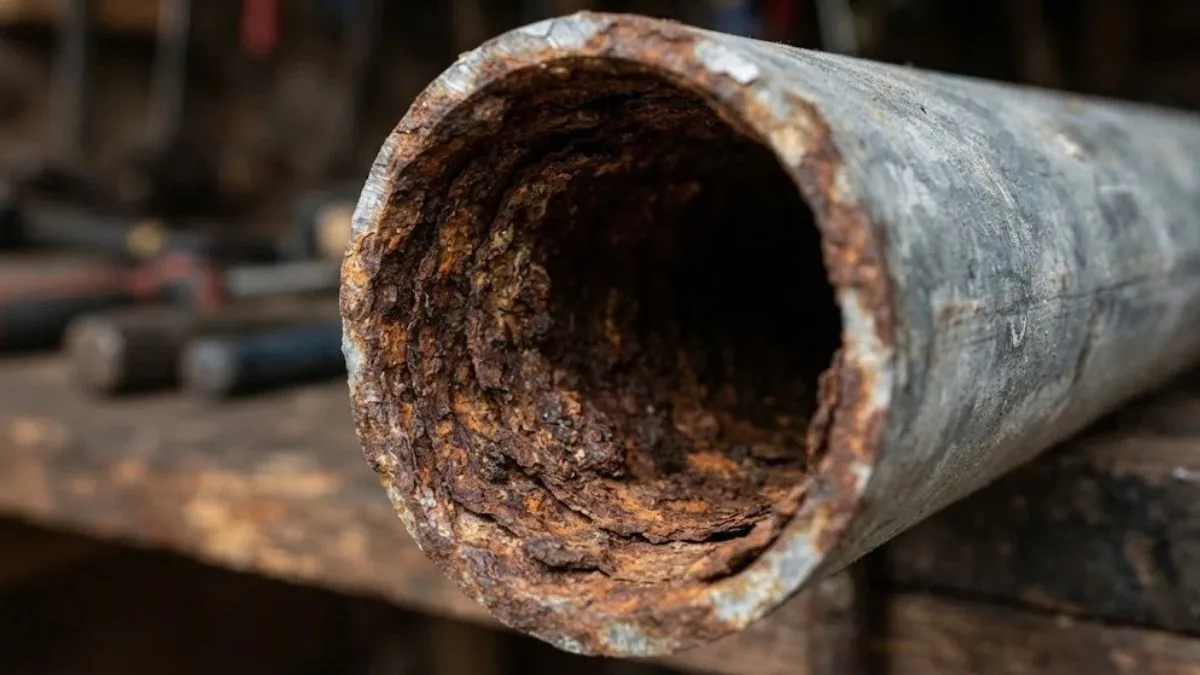
Older steel pipe corrodes from the inside, and rust flakes break loose and color the water. Pressure usually drops over time as the pipe narrows. If your house has this kind of pipe, you may notice discolored water, weak flow, and repeated pinhole leaks. Our repiping and pipe replacement page explains when a repair stops making sense.
If only the hot side is affected, start with the heater. Our tank heater repair team tests the tank and the anode rod, and can tell you whether a flush will help or the tank is finished.
Why age matters
South Gate has roughly 5,600 homes built in 1939 or earlier by census-based counts, and Downey has roughly 13,400 from the 1950s. Houses that old may have original steel supply pipe or a mix of old and new. A plumber can identify the pipe material in a few minutes by looking at the main entry and a few fixtures. See our South Gate page for local details.
A simple clearing routine
Pick the lowest tap
An outdoor hose bib or a tub works well.
Run cold
Open it fully until the water runs clear.
Check the hot
Then run the hot taps and see if they clear.
Hold the laundry
Wait until the water is clear before washing.
If brown water returns every morning, the cause is probably inside the house. Old pipe sheds rust overnight when the water sits. If it appears in several homes on your street at once, it points to the utility. A call to your utility is free, and they can tell you whether there is work in the area.
If discoloration is persistent, a lab test can name what is in the water. A certified lab will test for iron, manganese, and other items. That is better than guessing or buying a filter first.
| Finding | Meaning | Action |
|---|---|---|
| High iron, clear in minutes | Likely the source or the mains | Flush, then watch |
| Brown that returns daily | Pipe corrosion in the house | Have the pipe inspected |
| Black staining on fixtures | Often manganese | Check the utility report |
| Brown only from hot | Water heater | Flush the tank, check its age |
Water that is brown is rarely an emergency, but it is a signal. Take a photo of the glass and note the date, because a record helps the utility, your landlord, or a plumber figure out the cause.
A short script for the phone
What to say and ask
- 1I am seeing brown water at my address. Is there flushing or main work nearby?
- 2Has anyone else on my street called?
- 3When was the last flushing in my area?
- 4Can you tell me about iron and manganese in the supply?
- 5Who should I call if it does not clear?
Utilities keep records of flushing schedules, main repairs, and complaints. A call usually gets a quick answer, and it also puts your address on their list if the cause is on their side. If the answer is no work nearby and the problem is only at your house, the cause is likely inside your plumbing.
Keep a short log with the date, the time, which taps are affected, and how long it takes to clear. A pattern, such as brown every morning, tells a plumber more than a single sample ever could.
Utilities and regulators treat iron and manganese as secondary standards, which means they are guidelines about taste, color, and staining, not health limits. The City of South Gate's report says as much when it explains its manganese limit. Brown water can be a nuisance without being a health problem, but only your utility or a lab can tell you what is in your own water.
Common questions
It depends on the cause, and we are not able to give medical advice. Brown water is often rust or manganese, which affect color and taste. If you are unsure, stop drinking it, run the cold tap until it clears, and check with your water utility. For health questions, ask a physician.
That points to the water heater. Rust inside the tank or a worn anode rod can color hot water only. A flush may clear it, and a tank past ten years may need replacing.
Utilities flush hydrants to clear their mains, and the flow can stir up sediment. It is usually temporary. Run the cold tap until it clears, and hold off on laundry until it does.
A sediment filter helps with particles. If the source is inside your pipes, the better fix is replacing the pipe. See our filtration page for how to choose.
Discolored water that will not clear?
Call the Downey line and describe what you see.
☎ Call (562) 488-9614