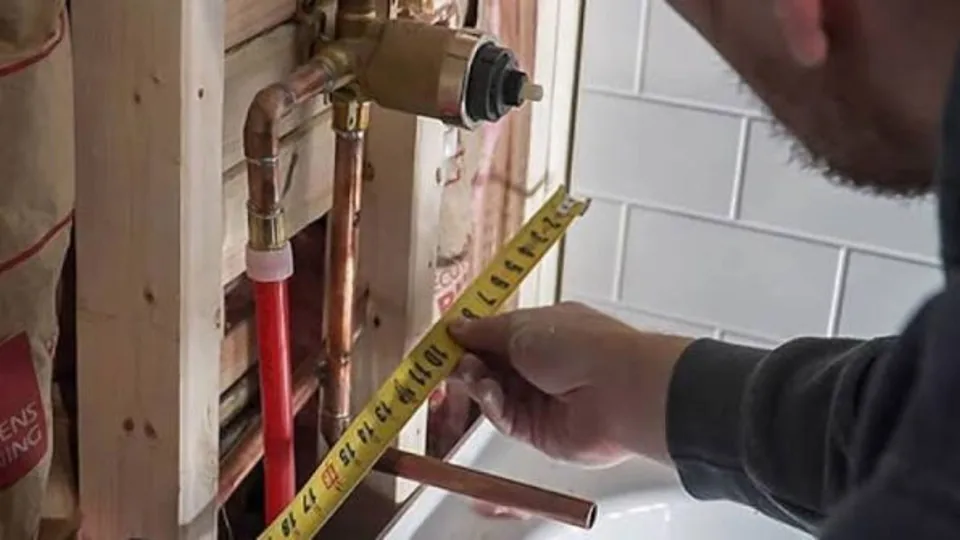
What decides how much a bathroom remodel costs in plumbing
Bathroom plumbing and remodel work in Downey, CA means planning and installing the water supply, drains, valves, and fixtures for a new or updated bathroom. The single biggest factor in the plumbing scope is whether you are keeping fixtures where they are or moving them.
A like-for-like update, with the toilet, vanity, and shower in their old spots, uses the existing pipes. A new layout means new drains and new supply lines, and on a concrete slab that means cutting the floor. Knowing which you are doing early saves money.
Keeping the layout
- Uses existing drains and supply
- Lowest plumbing scope
- Best time to replace aging valves
- Shorter timeline
Changing the layout
- New drains and supply routes
- Slab homes need concrete cut
- Venting and slope must be planned
- Needs a permit and inspection
| Stage | Who does it | What the plumber does |
|---|---|---|
| Demolition | Remodel crew | Shuts off water and caps lines |
| Rough-in | Plumber | Sets valves, drains, and supply lines, then pressure-tests |
| Inspection | City inspector | Checks slope, venting, and connections |
| Walls and tile | Drywall and tile trades | Nothing, but the rough-in must be protected |
| Finish plumbing | Plumber | Sets toilet, faucets, and trim, then tests everything |
Planning a bathroom project?
Call and tell us what you want to change. We will say what the plumbing involves.

What California expects of a new bathroom
California limits new fixtures to 1.28 gallons per flush for toilets and 1.8 gallons per minute for showerheads. The California Plumbing Code, built on the Uniform Plumbing Code (UPC), sets the rules for valve type, trap size, venting, and drain slope. Shower valves must be pressure-balancing or thermostatic, which is why a remodel is the right time to replace an old one.
Homes built before 1994 are also covered by California's SB 407, which requires water-conserving fixtures in older buildings and comes up at sale. This is general information, so confirm the details with your agent.
What a 1950s bathroom hides
Census-based counts put roughly 13,400 Downey homes in the 1950s. Bathrooms from that era often still have their original shutoff valves, shower valves, and tub drains behind the tile. Those parts are inexpensive to replace while the wall is open and costly to replace afterward.
Downey's water is hard, so scale builds up quickly on faucets and showerheads. Choosing fixtures with removable aerators and easy-to-clean finishes helps. For a closer look at the tub and shower side of the work, see our shower and bathtub installation page, and for the toilet, toilet repair.
What to settle before the plumber starts
- 1The layout: which fixtures stay and which move.
- 2The fixtures: the toilet, vanity, valve, and shower or tub you have chosen.
- 3The floor type: slab or raised.
- 4The permit: who pulls it and who schedules the inspection.
- 5The other trades: tile, drywall, and electrical, and the order they work in.
How the plumbing side runs
Plan
Layout, fixtures, and floor type are reviewed.
Rough-in
Valves, drains, and supply are set and tested.
Inspect
The city inspects where required.
Finish
Fixtures set, tested, and handed over.
What shapes the plumbing price
Insurance note: a planned remodel is a household expense. A sudden leak that damages the new work may be covered for the damage. Photograph progress and keep receipts.
Bathroom plumbing questions from Downey
Often, yes, but it depends on the floor. On a raised floor the drain can usually be rerouted between joists. On a concrete slab, moving a drain means cutting the slab, which adds cost and work. We look at the framing and the floor before we say what is realistic.
The plumbing rough-in, including the valves, drains, and supply lines, should be installed, tested, and inspected while the walls are open. Fixing a leak after tile is set means tearing the tile out. A leak test before closing the wall is the cheapest insurance in the project.
Usually, when plumbing is moved, added, or replaced behind a wall. A like-for-like fixture swap may not need one. We tell you what applies before work starts, and a permitted job includes an inspection.
California limits new fixtures: toilets to 1.28 gallons per flush, and showerheads to 1.8 gallons per minute. Choose models that meet those limits, and keep the manufacturer's labels in case an inspector or a buyer asks.
A plumber handles the valves, drains, supply, and fixtures. Demolition, framing, drywall, waterproofing, tile, and electrical are separate trades. We coordinate our part and tell you what the others need from us and when.
Plan to replace the shutoff valves, the shower valve, and the tub or shower drain while the wall is open. Older bathrooms often hide aged plumbing behind the tile. Inspecting first tells us whether that is a small job or a larger one.
If you are replacing a faucet only, see sink and faucet repair. When old supply pipes are in the wall you are opening, whole-home repiping may be worth discussing. We also plan bathrooms for homeowners in South Gate, CA.
Bathroom projects in Los Angeles County cities like Downey run on the City of Downey Water Division's hard water, so fixture finish and aerator access matter. Homes near the Columbia Memorial Space Center and the Promenade at Downey can choose fixtures with easy-clean parts to cut scale work later.
Ready to plan a bathroom?
Call the Downey line and we will walk through the plumbing side.
☎ Call (562) 488-9614