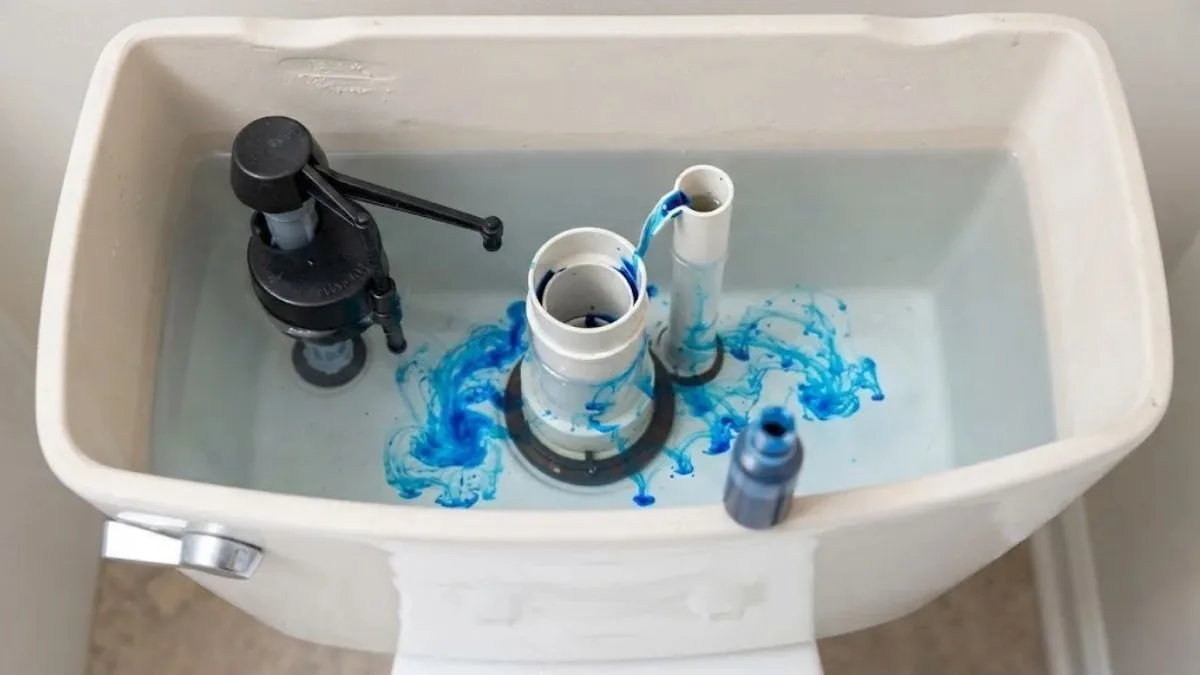
A toilet that keeps running almost always has one of three problems: a worn flapper, a fill valve set too high, or a chain that is too short or too long. You can test for the first with food coloring in the tank, and you can fix any of them in under an hour with a screwdriver and a part that costs less than a restaurant lunch. Here is how to tell which one you have.
It is worth doing promptly. The EPA's WaterSense program says a leaking toilet can waste 200 gallons or more per day, and the cost shows up on your water bill long before you see anything on the floor.
Three tests before you buy a part
| Test | What to do | What it tells you |
|---|---|---|
| Dye test | Add food coloring to the tank, wait 15 minutes, do not flush | Color in the bowl means the flapper leaks |
| Water level | Look at the water mark against the overflow tube | Water at or above the tube means the fill valve is set too high |
| Chain check | Look at the slack in the chain | Too tight keeps the flapper open, too loose may not lift it |
| Sound | Listen for hissing when the toilet is idle | Hissing points to the fill valve |
From easiest to hardest
Adjust the chain
Leave about half an inch of slack.
Lower the water
Turn the fill valve adjustment so the level sits below the overflow tube.
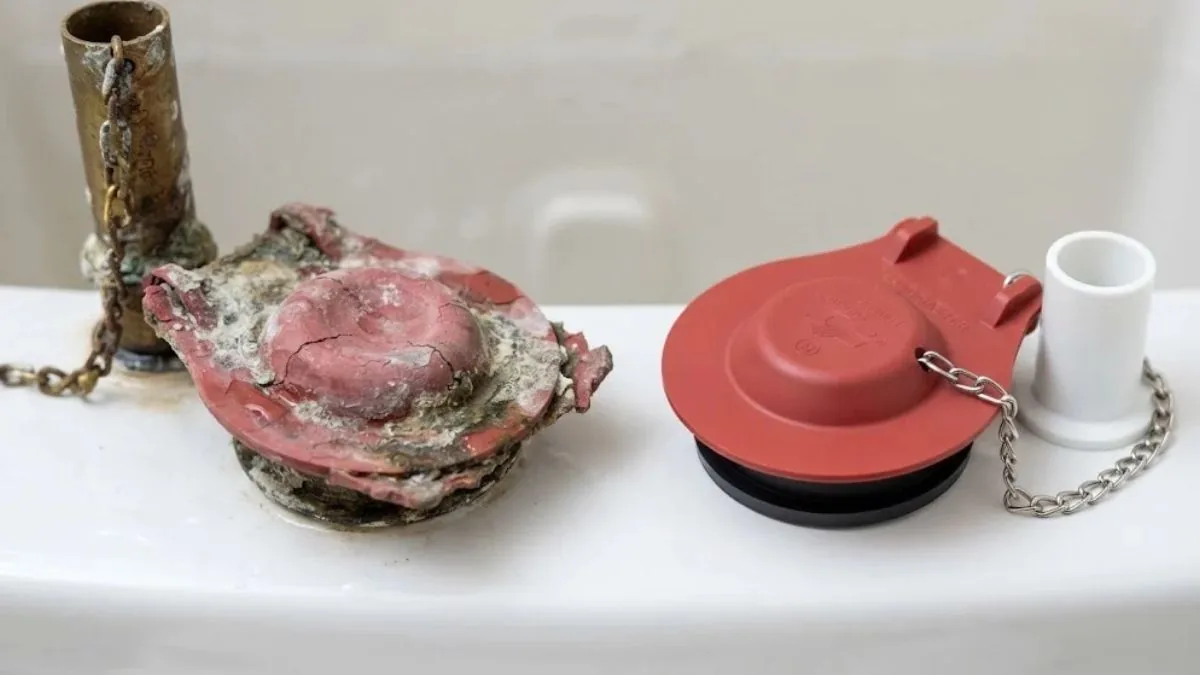
Replace the flapper
Shut off the supply, drain the tank, and swap the part.
Replace the fill valve
A universal kit fits most toilets.
Before you start any repair
- 1Close the supply valve behind the toilet and flush to empty the tank.
- 2Take a photo of the parts so you can match them at the store.
- 3Lay down a towel for drips.
- 4Check the age of the toilet. Over 25 years, replacement may cost less than parts.
- 5Keep the old part and take it with you to buy the new one.
Signs the problem is bigger
If the toilet rocks, leaks around the base, or the tank is cracked, the problem is not a flapper. A rocking or leaking base points to the wax ring or the flange. Water that seeps under the toilet can damage the subfloor, so do not wait on that. If the toilet clogs repeatedly, the problem may be in the drain line, which our drain cleaning and unclogging team can check.
Also consider the fixture itself. Older toilets can use far more water per flush than current ones, and California limits new toilets to 1.28 gallons per flush. Our toilet installation page explains when a new toilet is the better value.
Why this matters in older homes and rentals
Census-based counts show South Gate has roughly 5,600 homes built in 1939 or earlier, the largest age group in the city, and about 55 percent of its occupied homes are rented. In a rental, a running toilet is easy to ignore because the tenant may not pay the water bill. Tell the landlord in writing, because a leak that runs for months can damage the floor.
Hard water adds to the problem. The City of South Gate's 2021 report puts total hardness near 13 grains per gallon, and scale can foul a fill valve or a flapper seat. If you rent in South Gate, CA or live in an older house nearby, cleaning the flapper seat with a cloth during the repair is a good habit.
Flapper and fill valve, in detail
Shut and drain
Close the supply valve and flush to empty the tank.
Remove the old part
Unhook the flapper ears from the overflow tube, or unscrew the fill valve nut underneath.
Fit the new part
Seat the flapper evenly, or set the new fill valve height to match the overflow tube.
Adjust and test
Reopen the supply, set the water level, and flush twice.
Buy a universal flapper or fill valve kit, and take a photo of the old part to compare. Hold the new flapper against the old one to check the shape. Wipe the flapper seat with a cloth before installing, because scale or slime on the seat can make even a new flapper leak.
Set the water level about an inch below the top of the overflow tube. Too high, and water spills into the tube constantly. Too low, and the flush feels weak.
Rim jets and what to do about scale
If the toilet flushes weakly but does not run, the small holes under the rim may be clogged with scale. Pour a cup of white vinegar into the overflow tube, wait an hour, then flush. A small mirror and a thin wire help you see and clear the jets. Hard water is a frequent cause, and the habit of cleaning the jets twice a year prevents it.
If the bowl does not drain at the end of the flush, the problem may be a partial clog in the line. Repeated slow flushes are a reason to ask about the drain, not the toilet.
When a water bill spike points to the toilet
- 1The bill rose with no change in habits.
- 2The meter moves with every fixture off.
- 3The dye test shows color in the bowl.
- 4You hear the tank refill by itself.
- 5Fix the part first, then watch the next bill.
Symptom, cause, and fix at a glance
| Symptom | Cause | Fix |
|---|---|---|
| Runs a few seconds every few minutes | Flapper leak | Replace the flapper |
| Constant hiss, tank keeps filling | Fill valve stuck or set too high | Adjust or replace the fill valve |
| Handle must be held down | Chain too tight or flapper hung up | Adjust the chain |
| Weak flush, no running | Clogged rim jets | Vinegar soak |
| Water on the floor | Supply line or wax ring | Dry it, then diagnose |
A word on cost: parts for these repairs are inexpensive, and the time is the bigger factor. If you would rather not spend a Saturday on it, a plumber can do the job in a single visit and check the shutoff valve under the tank at the same time, which tends to be the next thing to fail in an older bathroom.
If you are replacing a toilet instead of a part, look for the EPA's WaterSense label. The WaterSense specification for tank-type toilets is 1.28 gallons per flush, and California limits new toilets to the same figure. The California Plumbing Code, built on the Uniform Plumbing Code (UPC), also expects a shutoff valve at each toilet, so the valve behind yours should work when you need it.
Common questions
The EPA's WaterSense program says a leaking toilet can waste 200 gallons or more per day. Many leaks are silent, so a rising bill is sometimes the first clue.
Put a few drops of food coloring in the tank and wait fifteen minutes without flushing. If color shows up in the bowl, the flapper is leaking.
Often yes. A flapper or a fill valve is an inexpensive part and a half-hour job with simple tools. If the toilet rocks, leaks at the base, or the tank is cracked, call a plumber.
Check the water level and the fill valve. If the level is above the overflow tube, water drains into it constantly. Lowering the fill valve usually fixes it.
Toilet leaking or overflowing?
Call the 24/7 line. Close the valve behind the bowl first.
☎ Call (562) 488-9614