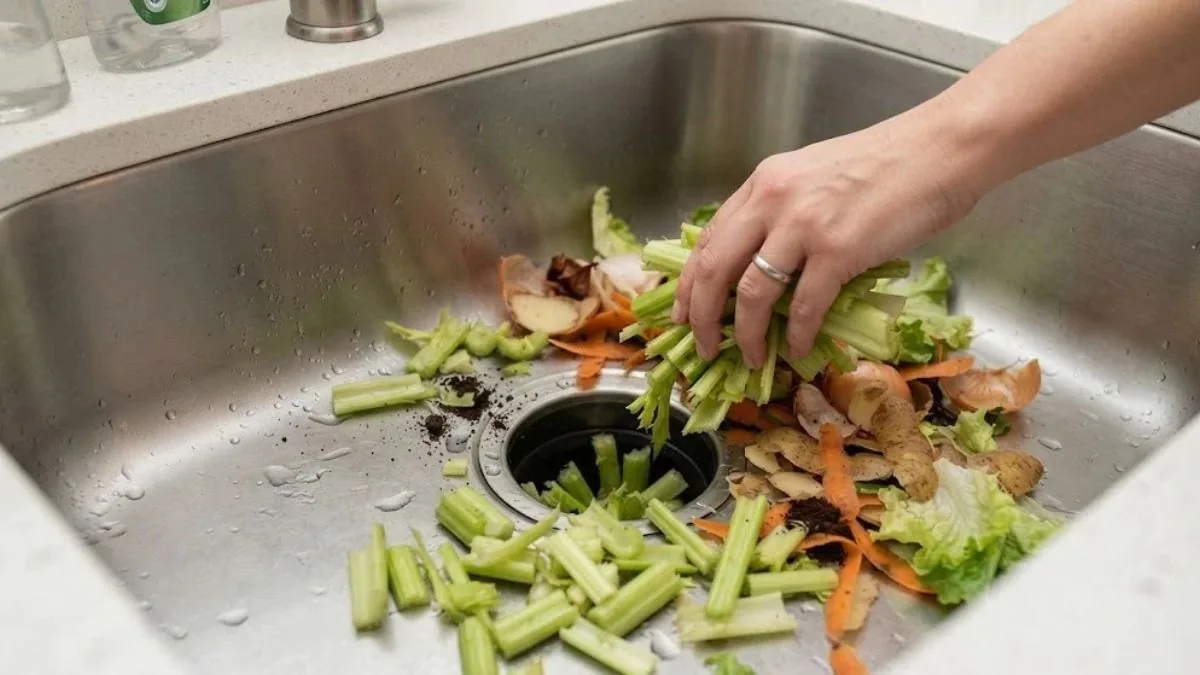
Do not put grease, oil, fibrous vegetables like celery and corn husks, bones in quantity, coffee grounds in bulk, pasta and rice, or non-food items down a garbage disposal. A disposal grinds soft scraps and sends them down the drain. It does not dissolve anything, and the things that do the most damage are the ones that cool, swell, or tangle after they leave the grinder.
A little care with the sink saves a clogged kitchen line, a burned-out motor, and a service call. The table below sorts the common items.
What to avoid and why
| Item | Why it causes trouble | What to do instead |
|---|---|---|
| Grease, fat, oil | Cools and coats the pipe | Wipe the pan, then trash the paper towel |
| Celery, corn husks, artichokes | Fibers tangle around the grinder | Compost or trash |
| Pasta and rice | Swell with water and form paste | Trash small amounts |
| Coffee grounds in bulk | Pack into sludge in the trap | Compost |
| Bones and pits | Hard items can jam or dull the grinder | Trash |
| Eggshells in bulk | Can build up in the drain | Compost |
| Non-food items | Jam the unit | Remove with tongs, switch off first |
What happens after it leaves the sink
Grease looks harmless as a liquid. It cools in the pipe, sticks to the wall, and catches food scraps. Over weeks the line narrows. On a larger scale, fats, oils, and grease are a recognized cause of sewer blockages, and many sewer agencies ask households and businesses to keep them out of drains.
Hard water adds to it. Mineral scale roughens the pipe, and grease and scale together build a coating a cable cannot remove. That is when hydro jet cleaning comes into the picture. Golden State Water's Norwalk average hardness was about 18 grains per gallon in 2025, and the City of South Gate's was about 13 in 2021, so scale is part of the picture in this area.
A short routine for a happy disposal
Five habits that help
- 1Run cold water before, during, and for about fifteen seconds after grinding.
- 2Feed scraps in small amounts, not a whole plate at once.
- 3Scrape plates into the trash first, and use the disposal for soft leftovers.
- 4Grind a few ice cubes and a citrus peel now and then to clean the grinder.
- 5Never put your hand in the disposal, and switch it off before checking a jam.
Jams, leaks, and bad smells
A jam usually clears with the hex key socket on the bottom of the unit and the reset button. A leak from the bottom means a cracked housing, and the unit needs replacing. Our garbage disposal repair page explains how we decide. If the sink backs up even when the disposal is off, the problem is in the drain line, and our drain cleaning service takes it from there.
Where it comes up most
In rentals, where several tenants share a drain stack, grease from one unit can block the line for all. About 57 percent of Paramount's occupied homes are rented by the 2020 Census, and about 55 percent in South Gate. If you manage a building, a note to tenants about what not to put down the sink is cheap insurance. We handle kitchen drain calls in Paramount and the neighboring cities.
A five-minute refresh
Switch off
Turn the disposal off at the switch and unplug if you can.
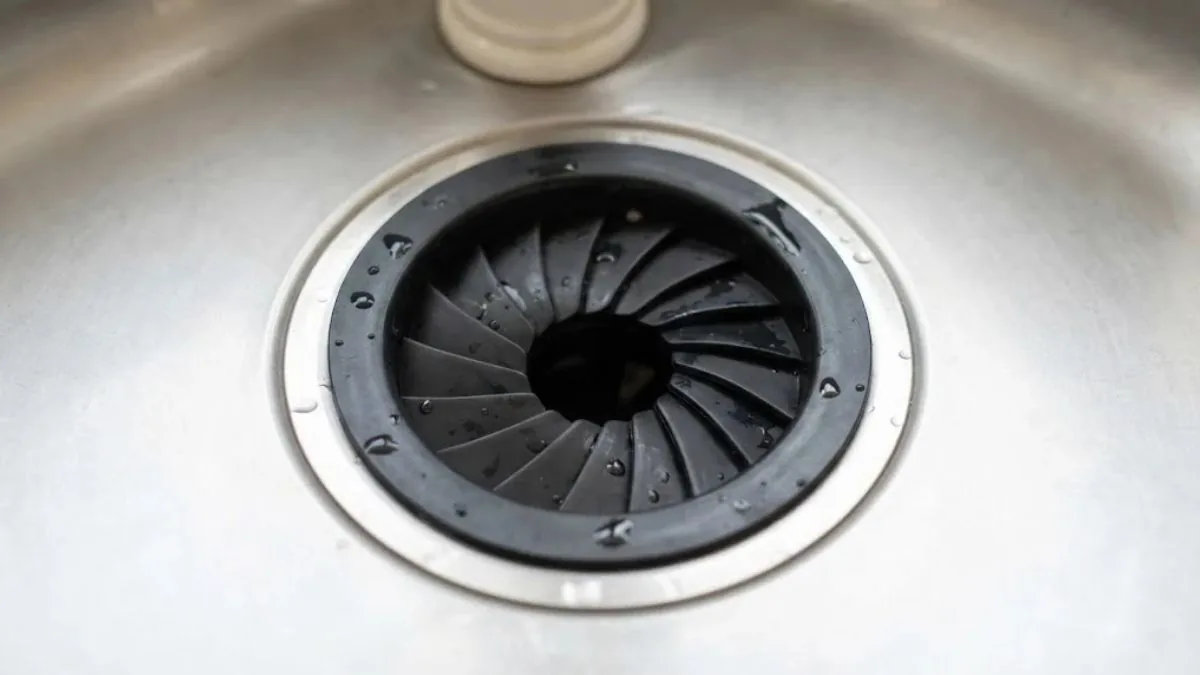
Scrub the splash guard
Use a brush and dish soap on the rubber flaps.
Grind ice
A cup of ice cubes knocks residue off the grinders.
Rinse with cold
Run cold water for twenty seconds, then a citrus peel.
| Symptom | Likely cause | What to try |
|---|---|---|
| Hums, does not spin | Jam | Hex key in the bottom socket, then reset |
| No sound at all | Tripped reset or no power | Press the reset button, check the breaker |
| Slow drain with it off | Clog in the trap or drain | Clear the trap, or call for drain cleaning |
| Bad smell | Residue | Ice and citrus, then clean the splash guard |
| Leak at the bottom | Cracked housing | Replace the unit |
Never put a hand into a disposal, even with the switch off. Use tongs or pliers to remove an object, and use the hex key from below to free a jam. Keep fingers well clear.
A disposal is a small appliance with a short list of jobs. Keeping the rules simple, soft scraps in and everything else out, extends its life and keeps your drain line clear.
A note for landlords and managers
- 1Post a short list of what not to put down the sink.
- 2Offer a reminder at move-in.
- 3Check disposals at turnover.
- 4Keep a record of repairs.
- 5Act promptly on slow drains in shared stacks.
What to do with each kind of scrap
| Scrap | Disposal | Trash | Compost |
|---|---|---|---|
| Soft fruit and vegetable trimmings | Yes, small amounts | Yes | Yes |
| Cooked leftovers, soft | Yes, small amounts | Yes | Depends |
| Grease and cooking oil | No | Cool and trash | No |
| Bones and shells | No | Yes | Depends |
| Coffee grounds | Small amounts only | Yes | Yes |
| Fibrous stalks and husks | No | Yes | Yes |
A small container by the sink for scraps makes the habit easy. Wipe greasy pans with a paper towel before washing, and pour cooled fat into a jar or can for the trash. These are small changes, and together they stop most disposal and kitchen drain problems.
One more habit worth building is a weekly rinse. Run hot water for a minute after washing greasy dishes, and wipe the sink walls so residue does not dry on them. A last tip: if you have a septic system, the rules are different, and many households in the wider region are on sewer, but check which you have.
Septic tanks are sensitive to grease and chemicals, and a disposal adds solids to the tank. In our service area homes are connected to public sewers, which still benefit from the same careful habits.
Disposals are listed to safety standards such as UL 430 and wired under the National Electrical Code (NEC), so a replacement should be installed with proper wiring and a switch you can reach. If yours is hardwired and you are replacing it, have a qualified person handle the connection.
Common questions
A little is not likely to cause trouble, but grounds can build into a sludge in the trap. Putting them in the trash or compost is safer for the drain.
Small amounts are fine and can freshen the disposal. They do not clean the pipe beyond the grinder.
Food residue on the grinding parts and in the drain. Grind ice and a few citrus peels, run cold water, and clean the rubber splash guard. If the smell persists, the trap or drain line may need cleaning.
Turn off the switch, unplug it if possible, never put a hand in, and use the hex key socket on the bottom to free the flywheel. Press the reset button and test.