Water in the cities around Downey ranges from hard to very hard, and the official numbers differ by utility. Golden State Water reported an average of about 18 grains per gallon in Norwalk for 2025, with a range of 8 to 30. The City of South Gate's 2021 report averages about 13.
Paramount's 2018 report puts its well water near 11. This article lines those figures up, explains the scale used to rank them, and says what they mean for your water heater.
Every number below comes from a utility's own report. Where we could not find an official figure, we say so instead of guessing.
How hardness is ranked
| Class | Milligrams per liter | Roughly grains per gallon |
|---|---|---|
| Soft | 0 to 60 | 0 to 3.5 |
| Moderately hard | 61 to 120 | 3.6 to 7 |
| Hard | 121 to 180 | 7.1 to 10.5 |
| Very hard | Over 180 | Over 10.5 |
This is the scale used by the U.S. Geological Survey. One grain per gallon equals 17.1 milligrams per liter, a conversion Golden State Water prints in its own report. By that scale, every official figure below is hard or very hard.
What each utility reported
| City | Utility | Reported hardness | Year |
|---|---|---|---|
| Norwalk | Golden State Water, Norwalk System | Average 310 mg/L (about 18 gpg), range 137 to 505 | 2025 |
| South Gate | City of South Gate | Average 226 mg/L (about 13 gpg), range 200 to 250 | 2021 |
| Paramount | City of Paramount, wells | Average 190 mg/L (about 11 gpg), range 160 to 230 | 2018 |
| Paramount | City of Paramount, imported MWD water | Average 171.5 mg/L (about 10 gpg), range 84 to 274 | 2018 |
| Downey | City of Downey Water Division | We could not retrieve the city's own figure | n/a |
| Pico Rivera and Santa Fe Springs | Local utilities | Not found in the reports we reviewed | n/a |
How to read the table
- 1An average hides a range. Norwalk's 2025 range runs from 8 to 30 grains per gallon.
- 2Years differ. A 2018 figure may not match the current water.
- 3Blends change. Utilities that mix well water and imported water see numbers move.
- 4Your tap may differ. Test it.
- 5A missing figure is not a good figure. It means we did not find one.
Scale in your water heater and fixtures
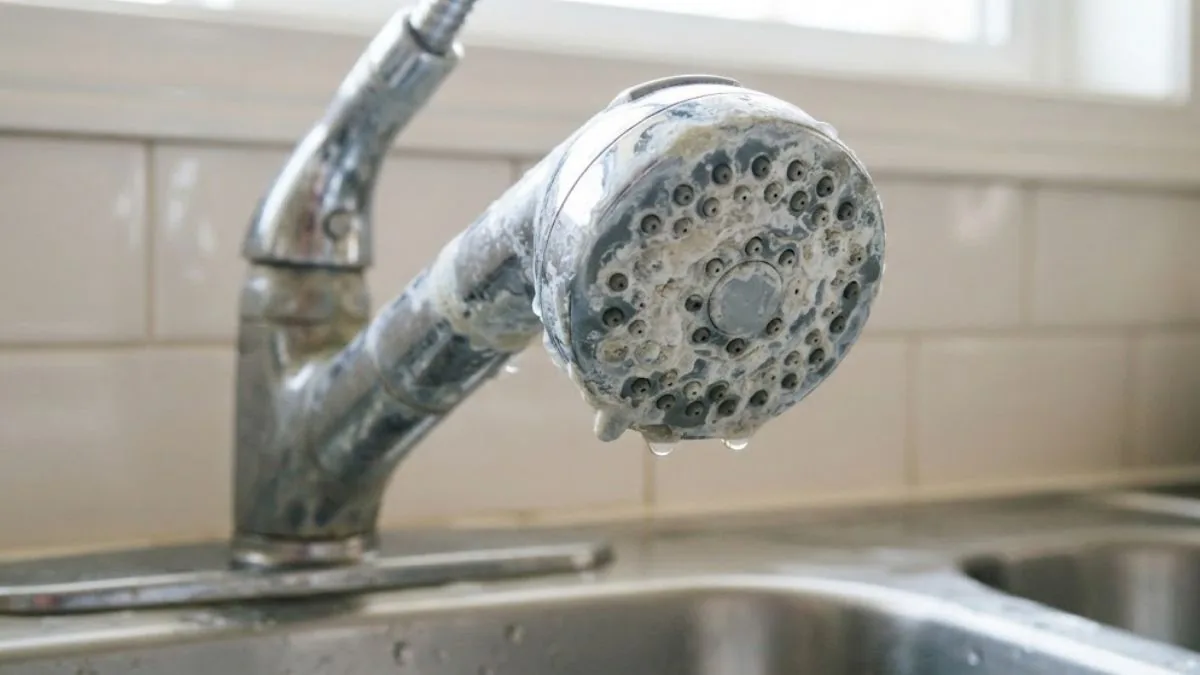
Hard water leaves scale. In a tank water heater, scale settles as sediment, insulates the water from the burner, and uses up the anode rod. Our guide to flushing a tank explains the routine, and our hot water heater repair page covers when a tank is past saving. On faucets and showerheads, scale shows as white crust and weak flow.
The cure for scale is a softener, which removes the minerals. The cure for the symptoms is regular maintenance. A softener is worth considering when the average sits above about 10 grains per gallon. Our softener installation and repair page includes a sizing calculator that uses the figures above.
The gap we are being open about
Downey's water comes from 20 deep groundwater wells in the Central Basin, with three imported connections from the Metropolitan Water District as backup. Both sources carry minerals, so Downey's water is hard, and the neighboring official figures above suggest the range. We could not retrieve the city's own current figure, and we will not print one we cannot source.
The City of Downey Water Division's annual report is the authority. If you want to size a softener or tune a water heater routine, use that report or a test strip at your tap. We also cover the water in Norwalk in more detail, since its report is the most complete.
A family of four, three different cities
| City figure | Grains per gallon | Grains removed per day | Days on a 32,000 grain softener |
|---|---|---|---|
| Norwalk, 2025 average | 18 | about 5,900 | about 5.4 |
| South Gate, 2021 average | 13.2 | about 4,300 | about 7.4 |
| Paramount, 2018 well water | 11.1 | about 3,600 | about 8.8 |
The example assumes four people at 82 gallons per person per day, the EPA's average for indoor use. The same family uses about the same water in each city, but the softener works harder in Norwalk than in Paramount, which changes how often it regenerates and how much salt it uses. Our softener page has a calculator you can adjust.
Averages hide a lot. Norwalk's 2025 range ran from 8 to 30 grains per gallon, so a family there could see a very different number from month to month, and a home on one side of town could differ from another.
Other ways hardness shows up
- 1White crust on faucets and showerheads.
- 2Spots on glassware after the dishwasher.
- 3Soap that does not lather well.
- 4Stiff laundry and dull towels.
- 5A water heater that runs out of hot water sooner each year.
Salt-free conditioners do not remove hardness minerals. They change how scale forms, and results vary. If your goal is to stop scale, a salt-based softener removes the minerals, but check local rules about brine discharge before you buy.
Where to look in a utility's annual report
Find the table
Look for a section called Other Parameters or Additional Constituents of Interest.
Spot hardness
It is listed as total hardness, in mg/L or grains per gallon.
Check the range
Note the minimum and maximum, not just the average.
Check the year
Use the most recent report, and note the sampling date.
If the report gives milligrams per liter, divide by 17.1 for grains per gallon. A figure of 171 mg/L is 10 grains per gallon, for example. Many reports list hardness in a table near the end, and the numbers are easy to miss if you only read the first pages.
If you are shopping for a softener or a water heater, bring the figure from your own utility report to the conversation. A good installer will ask for it, and it changes the recommendation. A household at 18 grains per gallon needs a larger unit or more frequent regeneration than one at 11, and the maintenance schedule for the water heater tightens as the number rises.
Practical steps cost little. Request your utility's report, test your tap with a strip, and call a technician if your water heater is more than eight years old. If scale is already damaging fixtures, ask for a repair estimate for the worst of them and a price for a softener, then compare. According to the utility reports cited above, the smart move in every one of these cities is to plan for scale instead of reacting to it.
Common questions
Each utility draws on different sources. Some pump from deep wells, some buy imported water, and many blend both. Groundwater and imported water carry different minerals, and a blend shifts from month to month.
It is a unit of hardness used for sizing softeners. One grain per gallon equals 17.1 milligrams per liter, as Golden State Water states in its own report. Utilities often report milligrams per liter, so conversions are common.
Hardness is generally an aesthetic and maintenance issue, not a health issue. It leaves scale and uses more soap. For health questions, ask a physician.
Your utility's annual water quality report lists it. A test strip or lab test at your tap gives the most accurate figure for your house.